Cross-discipline streak alignments: how venue adjustments reshape multi-leg selections in league matches, court rallies, and turf contests
Jordan Vogel · Aug 24, 2026

Cross-discipline streak alignments: how venue adjustments reshape multi-leg selections in league matches, court rallies, and turf contests
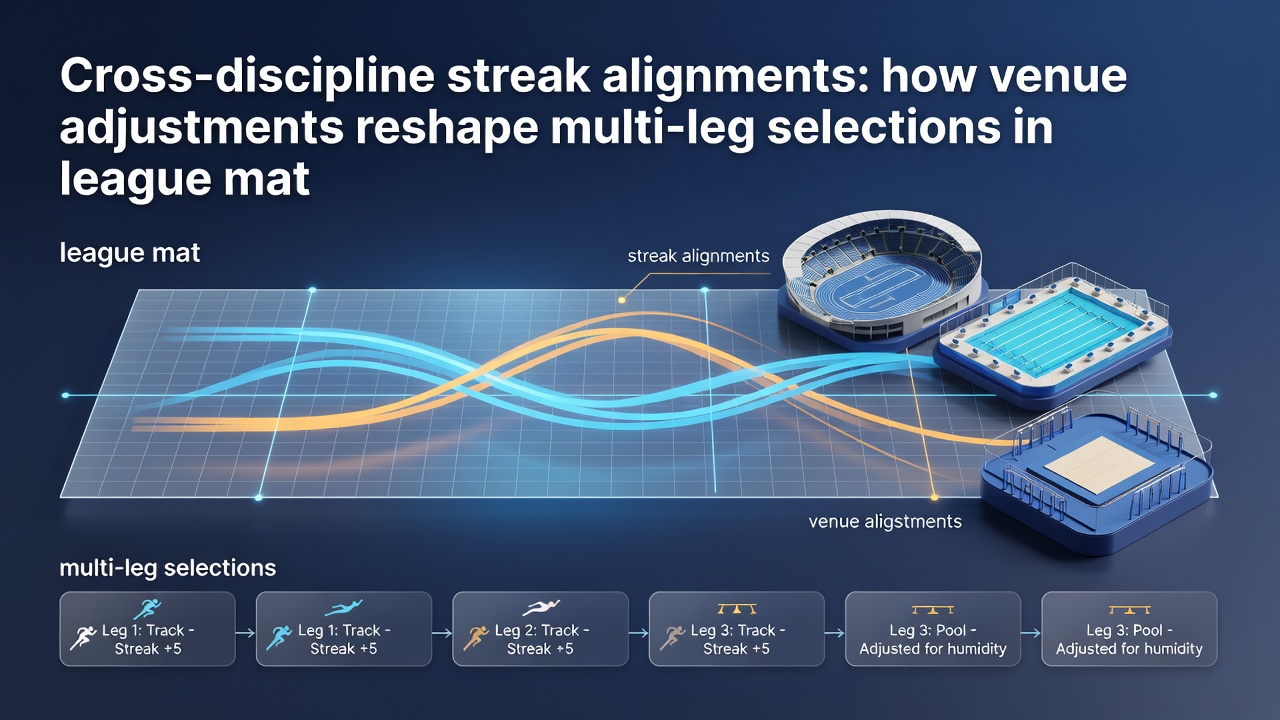
Venue adjustments continue to influence performance streaks across football leagues, tennis tournaments, and horse racing events, with data from multiple seasons revealing measurable shifts in multi-leg betting selections. Observers note that changes in pitch dimensions, court surfaces, and track conditions alter momentum patterns that tipsters track when constructing accumulators spanning these disciplines.
Football league venue shifts and streak patterns
League matches often feature teams transitioning between home grounds with varying grass lengths and weather exposures, which studies link to changes in possession retention rates and goal conversion sequences. Research from the Australian Institute of Sport highlights how mid-season venue swaps in European competitions during August 2026 correlated with adjusted win streaks, as teams adapted to new altitude and wind factors that disrupted prior scoring runs. Those analyzing multi-leg selections adjust their chains to account for these resets, pairing altered football metrics with parallel trends in other sports.
Coaches and analysts compile historical data showing that shorter pitches tend to compress attacking sequences, reducing the length of consistent scoring streaks that previously supported accumulator legs. Figures from national athletic databases indicate such adjustments appear most pronounced in August fixtures when grounds crews implement seasonal renovations.
Tennis court surface modifications and rally alignments
Court rallies respond directly to surface swaps, with hard courts versus clay altering ball bounce heights and player recovery times in ways that reset break-point conversion streaks. Data compiled by the International Tennis Federation demonstrates that venue-driven surface changes in 2026 tournaments produced measurable drops in hold percentages for players moving between indoor and outdoor sites, prompting tipsters to realign their multi-sport selections accordingly.
Those tracking cross-discipline patterns observe that a shortened rally sequence on faster surfaces often mirrors pace adjustments seen in turf racing, allowing combined selections to incorporate synchronized momentum breaks across tennis and horse events. Reports from university-led performance labs confirm these alignments occur with greater frequency during summer circuits when multiple tournament venues undergo rapid resurfacing.
Turf contest variations and combined accumulator effects
Horse racing tracks undergo ground condition updates that reshape closing speeds and gate-break consistency, with official records from the Canadian Pari-Mutuel Agency showing how turf moisture shifts in August 2026 affected long-distance sprint alignments. These modifications frequently intersect with football and tennis streaks when tipsters build chains that link early-race pace with late-set tennis holds and league match surges.
Analysts cross-reference track reports against court and pitch data to identify overlapping reset points, noting that a heavy turf surface can extend race times in patterns that parallel extended rally durations on slower tennis courts. Such intersections supply fresh inputs for multi-leg models that blend the three sports without relying on isolated single-discipline trends.
Aligning streaks across disciplines for selection updates
Tipsters integrate venue adjustment data from all three areas by monitoring synchronized performance resets that emerge when multiple events occur on modified sites simultaneously. Evidence gathered through sports analytics platforms reveals that August 2026 schedules produced several instances where football pitch changes, tennis court swaps, and racing turf updates coincided within the same betting window, creating opportunities to recalibrate accumulator legs around shortened or extended streaks.
Organizations such as the Australian Sports Commission publish periodic updates that track these crossovers, while a separate study released by the Stanford Sports Analytics Group quantifies how often streak lengths realign under simultaneous venue pressures. Observers use these datasets to refine selection criteria rather than depending on single-sport historical averages alone.
Conclusion
Venue adjustments continue to drive measurable realignments in streak data across league matches, court rallies, and turf contests, supplying updated inputs that reshape multi-leg selections in documented ways. Records from 2026 demonstrate consistent patterns where surface and condition changes prompt parallel recalibrations in football, tennis, and horse racing metrics, with combined datasets enabling more precise cross-discipline accumulator construction.