Atmospheric Conditions as Predictors: Linking Precipitation Effects on Football Fields, Tennis Courts, and Racetracks to Strategic Multi-Wager Constructions
Bianca Schmid · Sep 9, 2026

Atmospheric Conditions as Predictors: Linking Precipitation Effects on Football Fields, Tennis Courts, and Racetracks to Strategic Multi-Wager Constructions
Precipitation patterns have long served as measurable variables in sports performance analysis, and observers note that forecasters in September 2026 continue to track rainfall data across multiple venues to inform accumulator strategies. Data from meteorological networks indicate that moisture levels alter surface friction on grass pitches, clay courts, and dirt tracks in distinct yet interconnected ways, creating opportunities for layered wagers that combine outcomes from football matches, tennis tournaments, and horse races.
Precipitation Impacts on Football Field Conditions
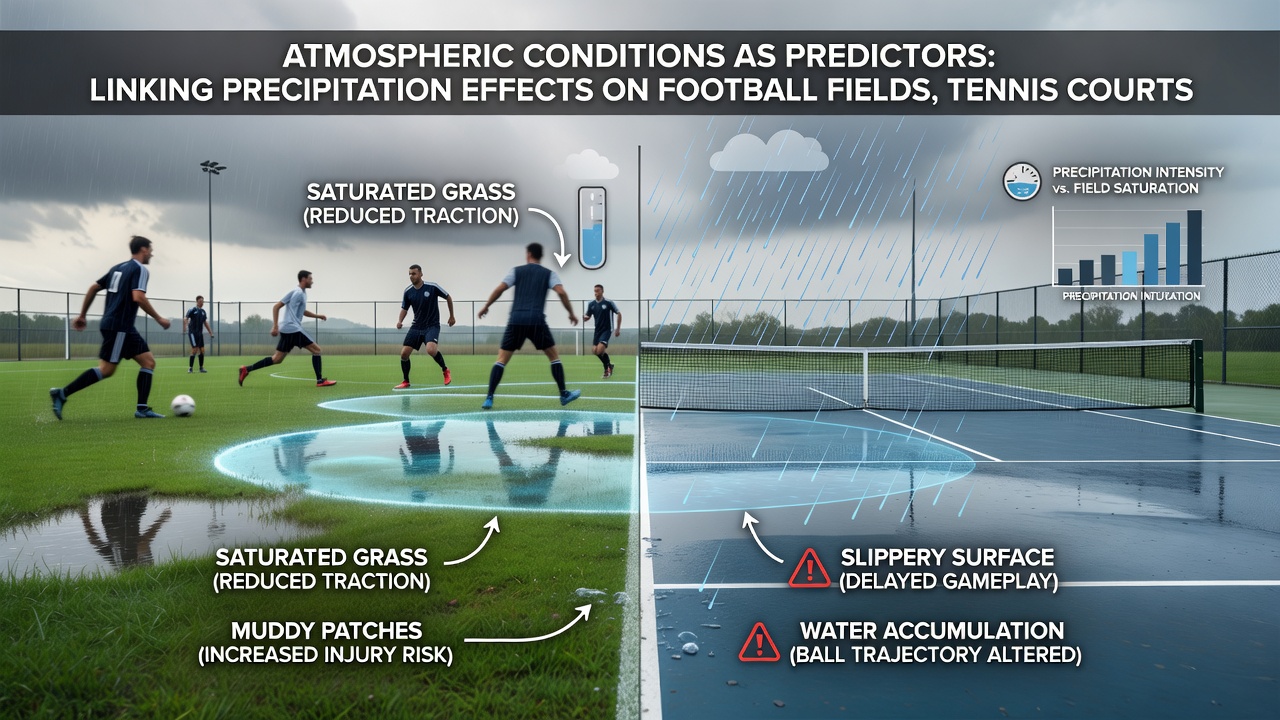
Heavy rainfall saturates natural turf surfaces, which reduces ball roll speed while increasing the likelihood of slips during tackles and sprints, according to studies compiled by the National Oceanic and Atmospheric Administration. Groundskeepers apply additional aeration and drainage measures in advance, yet residual water still shifts match statistics toward lower goal tallies and higher draw probabilities when accumulators include several fixtures on the same card. Teams that favor possession-based styles often adjust formations earlier in wet conditions, producing measurable drops in expected goals that tipster models incorporate when chaining football selections with events from other sports.
Effects on Tennis Court Playability
Clay courts absorb moisture unevenly, leading to slower bounce and extended rally lengths that favor baseline players over serve-dominant competitors, while hard courts develop slick patches that alter footwork timing. Tournament organizers release updated court speed ratings after each rainfall event, and researchers have documented consistent shifts in break-point conversion rates under these adjusted surfaces. Multi-wager builders monitor hourly precipitation forecasts to decide whether to include sets from outdoor tournaments alongside football or racing legs, because a single delayed start or surface change can realign odds across the entire chain.
Racetrack Surface Variations and Racing Outcomes
Dirt and turf tracks respond to rain by transitioning through official going descriptions from firm to soft or heavy, which lengthens finishing times and elevates the success rate of horses wth proven mud-running pedigrees. Racing authorities publish updated track reports every thirty minutes during active meetings, and historical datasets reveal that certain sires produce offspring whose win percentages rise sharply once moisture exceeds specific thresholds. Accumulator constructors therefore cross-reference these reports with football and tennis forecasts to identify correlated value points, such as pairing a mud specialist in an evening race with an early kickoff on a rain-affected pitch.
Constructing Cross-Sport Accumulators Around Weather Data
Tipster platforms integrate real-time precipitation models from multiple agencies into unified dashboards that flag when conditions align across venues scheduled on the same day. A single low-pressure system moving through Europe in September 2026, for instance, can simultaneously soften several Premier League pitches, slow hard courts at an ATP event, and turn a jumps meeting into a stamina test, allowing one forecast to influence three or more legs of an accumulator. Software tools calculate covariance between surface metrics and historical results, then output suggested stake distributions that keep overall risk within predefined parameters while maximizing the number of weather-sensitive selections.
Industry reports from the Australian Bureau of Meteorology highlight how seasonal rainfall bands affect southern hemisphere racing calendars at the same time northern football leagues encounter autumn showers, giving global bettors simultaneous data streams to monitor. Those who maintain separate models for each sport often discover that combining outputs yields tighter probability estimates than isolated analysis, particularly when a common weather front creates parallel disruptions.
September 2026 Forecast Integration Practices
During the opening weeks of the 2026-27 football season, forecasters note increased use of ensemble precipitation models that provide probability bands rather than single-point predictions. These bands feed directly into accumulator builders that automatically adjust implied probabilities for draw-heavy football matches, extended tennis sets, and slower race times. Venues equipped with advanced drainage systems still experience localized flooding that triggers official postponements, forcing last-minute swaps within multi-leg wagers and demonstrating the need for contingency selections already conditioned on similar weather profiles.
Conclusion
Atmospheric data continue to supply quantifiable inputs that link surface conditions across football, tennis, and horse racing, enabling structured multi-wager constructions that reflect measured environmental effects rather than isolated event analysis. As forecasting resolution improves and cross-sport datasets expand, the precision of these linkages is expected to increase, giving participants additional variables to incorporate into their planning frameworks.